
Send it once. Know it landed.
Fill in one profile per Year 6 pupil and it goes to whichever secondary school they join. You can see when it has been received, so there is no chasing and no repeating yourself.


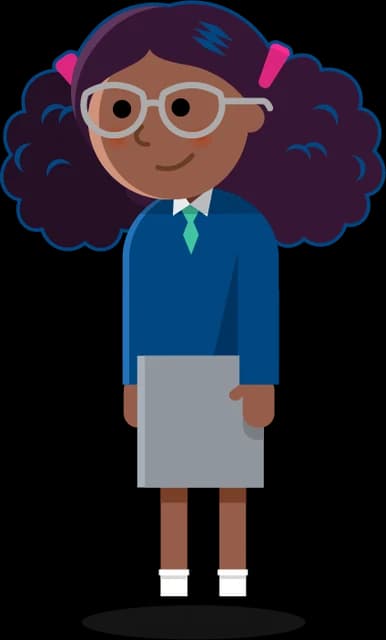



The whole picture of a learner, written once
Your MIS fills in the basics. The staff who know each learner add the rest, once.

Sixty pupils, fifteen secondary schools, one summer term.
Pikes Lane Primary School in Bolton used to hold a meeting with every school. Now each profile is completed once, and meetings are kept for the pupils who need one.
- or so pupils leave each year
- 60
- different secondary schools, at most
- 15
- profile for each pupil, sent once
- 1
Rachel BurkePastoral LeadPikes Lane Primary School, BoltonWe have said no to meetings that are not required because we have uploaded everything you need. We are happy to meet about the most vulnerable pupils, but not every learner. It has helped us manage our workload better.
 Read the Pikes Lane story
See how a Year 6 profile comes together.
On a 30-minute call we show you a profile from start to finish, from the details your MIS fills in to the moment the secondary school opens it.
Primary schools and areas that have shared their story
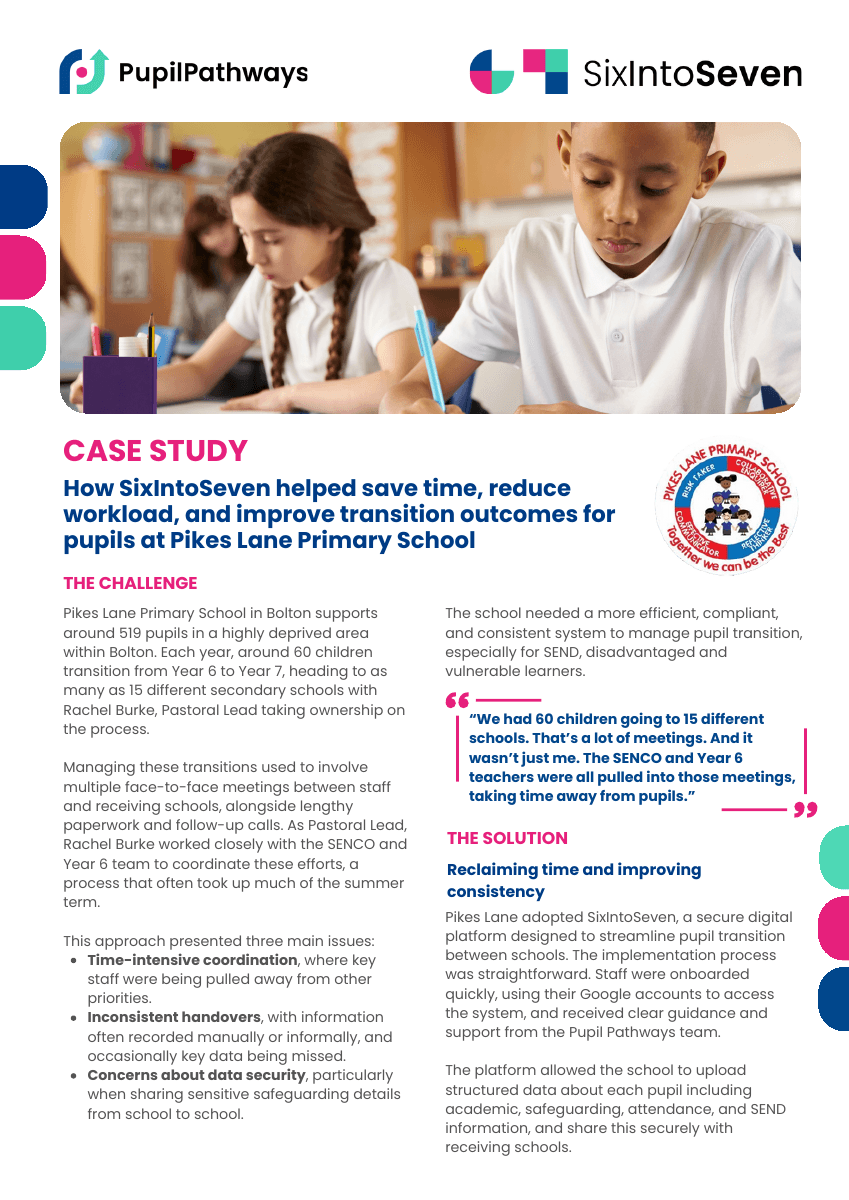
Case study · Pikes Lane Primary School
Saving time across 15 secondary schools
How one Bolton primary cut transition meetings without losing any of the detail.
Read it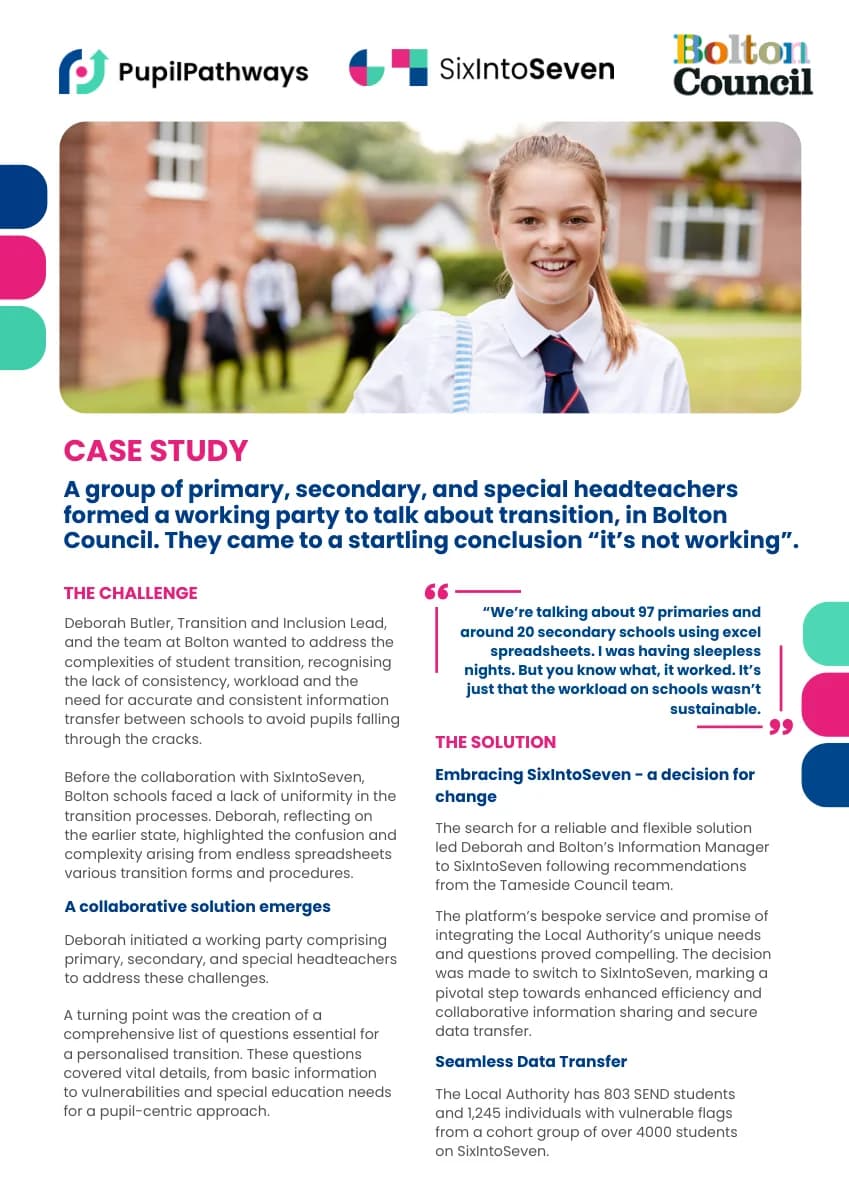
Case study · Bolton Council
Primary, secondary and special heads agree one process
Why a working party of Bolton headteachers decided the old way was not working.
Read it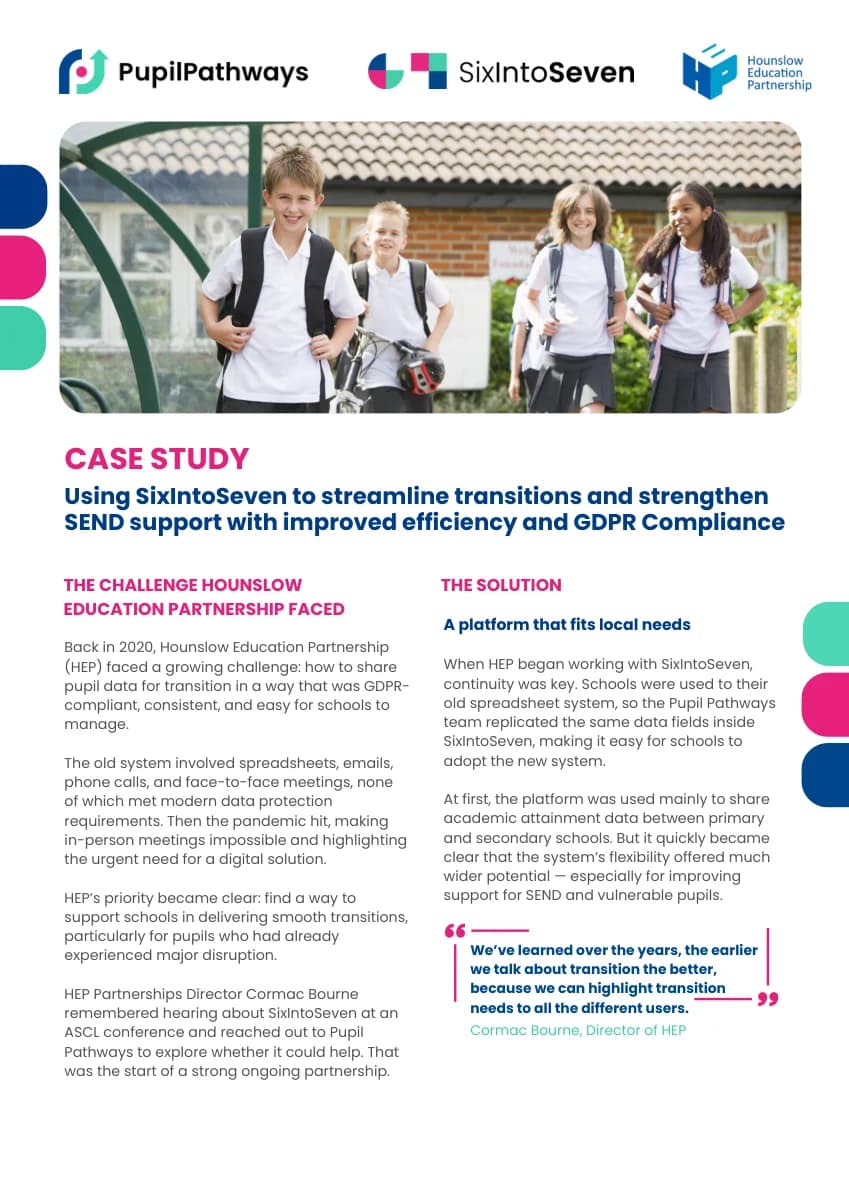
Case study · Hounslow Education Partnership
Primaries and secondaries in one partnership
How Hounslow’s schools moved from spreadsheets and phone calls to one shared process.
Read it
What Year 6 teams ask us
What do we have to do, and when?
Once your DPA is signed and your MIS is connected, each pupil’s passport, including their flags, can be completed from November. After national allocation day, transition and other meetings can be arranged if needed.
How do we know the passport has arrived?
After national allocation day, secondary schools log in and see their Year 7 cohort. Once the secondary school has actioned a passport, your school is notified.
How is this different from the Common Transfer File?
The Common Transfer File carries data your MIS already holds. The profile adds what only teachers can tell you: how a pupil learns, what worries them, who they are close to and what helps them settle. For a successful transition, the soft data matters as much as the hard data.
Do we still have to hold transition meetings?
We recommend you keep them, especially for the pupils who need them most. Pikes Lane Primary now meets secondary colleagues about its most vulnerable pupils rather than every learner, because the detail has already been shared.
Who can see what we write?
Access is by permission only. Only the staff at the receiving school who need to see the information have access.
Is sharing this way GDPR compliant?
Yes. Profiles are shared securely rather than by email or on paper, which was one of the reasons Pikes Lane moved to SixIntoSeven. The security page sets out the detail.
More for primary schools
- StepIntoSchoolEarly years passports, before Reception
- Secondary schoolsWhat the receiving school sees
- Security and dataHow pupil information is held and shared
- Year 6 into Year 7 Transition: Pastoral vs AcademicArticle · 4 March 2026
- School Transition Case Studies That Build BelongingArticle · 24 February 2026
Get some of the summer term back.
Book a call and we will show you a Year 6 profile, how flags and voice notes work, and what your secondary schools will see.